Shelby Should Take Responsibility for Her Actions
- Donald L. Daniel III, T3 Web Editor
- Apr 4, 2017
- 4 min read
The phrase "personal damn responsibility" is bandied about quite frequently by my acquaintances that lean more toward conservatism. The phrase itself isn't bad. I firmly believe that we should all take responsibility for our actions. My issue with the phrase begins when it is used as a justification for doing the exact opposite. "Well, he was a bad guy. He shouldn't have put himself in that situation. He should not have broken the law. Personal damn responsibility..."
The phrase has become yet another vehicle for ignoring glaring issues within the criminal justice system, especially when it comes to the unjust crucifixion of minorities. Most of the people who use this phrase as a device in debate, use it to place the blame of state-sponsored violence squarely on the shoulders of the victims, while simultaneously removing that same burden of responsibility from the executors of such violence.
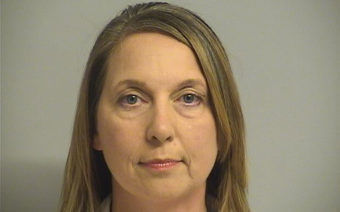
In 2016 Betty Shelby, while acting as an officer of the law, gunned down Terrance Crutcher, citizen. Shelby is facing manslaughter charges in Oklahoma. The fact that Shelby is being prosecuted at all is a miracle worthy of its own essay, so we won't talk about that except in passing. I probably wouldn't even be writing this piece right now if it weren't for the fact that Shelby refuses to take -- you guessed it -- personal damn responsibility for her actions.
On April 2, Shelby -- out of jail on bond -- gave a television interview to CBS program 60 Minutes. In the interview Shelby describes Crutcher as possibly under the influence of PCP when she passes him standing in the road while on her way to a domestic violence call. Crutcher's autopsy report confirms the presence of the drug in his system.
"His hands are just dropped beside him. His chin is resting on his chest. And he’s standing there motionless. And I thought, 'Hmmm. I wonder if he’s on PCP,'" Shelby tells CBS.
Shelby describes Crutcher's behavior as odd and "zombie-like."' She indicates that is was the reason she believed him to be under the influence.
This description is consistent with what the National Highway Traffic Safety Administration (NHTSA) describes as the effects of PCP.
Effects are usually dose dependent, and include euphoria, calmness, feelings of strength and invulnerability, lethargy, disorientation, loss of coordination, distinct changes in body awareness, distorted sensory perceptions, impaired concentration, disordered thinking, illusions and hallucinations, agitation, combativeness or violence, memory loss, bizarre behavior, sedation, and stupor.
When Shelby describes the events that lead to Crutcher's fatal shooting she says that she fired because Crutcher would not comply with her verbal commands, and became a threat when he reached in the vehicle. She says that she saw his shoulders drop and reach rapidly into his vehicle which made her fear for her life and caused her terminal trigger squeeze. The second officer on the scene fired his Taser at the same time as Shelby and echoes her claim that Crutcher was allegedly reaching in the vehicle.
Bill Whitaker, CBS correspondent, asked whether she had any regrets about this. Shelby replied, "I have sorrow that this happened that this man lost his life but he caused the situation to occur. So in the end, he caused his own [death]."
"Was Terence Crutcher’s an avoidable death," asks Whitaker.
"Yes," Shelby replies.
"What would've changed things?" This is Whitaker's last question for Shelby.
"If he would’ve complied," Shelby replies. " If he would have communicated with me, if he would’ve just done as I asked him to do, we would not be here."
"You and I would never have met and no one would ever know my name."
Here's my problem with all of this. Some of the symptoms of PCP intoxication as listed by the NHTSA include disorientation, impaired concentration and bizarre behavior. My question is if Officer Shelby noticed these specific symptoms in Crutcher, why would she be so baffled that he was unable to comply with verbal commands?
If, during the entire encounter preceding the shooting, Shelby doesn't notice any aggressive behavior, why make the decision shoot when Crutcher allegedly reaches for the vehicle? Why do we as a society train police officers to misidentify a threat and make a shoot/don't shoot decision without ever positively determining that a weapon is present?
Comply or die policing is not advantageous to maintaining a free and equitable society. The methods used to train police officers in threat recognition should be revisited. A system of law enforcement that statistically doesn't meet the needs of persons of color needs to be retooled. A policing community that can't understand why Black lives matter too, needs some serious introspection.
Do I believe that Betty Shelby is a bad person? No. Do I believe that she wanted to kill Mr. Crutcher? No. Do I believe that she acted maliciously? No. Do I believe that persons in violation of the law should face fair and impartial consequences? Yes.
However, placing the blame for the deaths of the unarmed solely on the shoulders of dead men allows officers like Shelby to release themselves from any culpability in their deaths. The theory of personal damn responsibility infers that for every situation there is always a choice. Crutcher isn't the only one who had the power to prevent his death. Shelby, too, could have acted to prevent this tragedy. She could have made a choice not to pull the trigger that September day, and everyone would have walked away alive. Recognizing that this is true would be, for Shelby, personally damned responsible.


Comments